


Three-cent silver (1851–1873) melt value
The three-cent silver, sometimes called a trime, is a tiny silver coin worth three cents. Coins from 1851 to 1853 weigh 0.80 grams and are 75% silver, about 0.019 troy ounces each. From 1854 the Mint made them lighter but purer: 0.75 grams of 90% silver, about 0.022 troy ounces. Its silver is worth very little, but even worn coins usually sell to collectors for far more than melt, so have yours checked by a coin dealer before selling it. Here's what the silver inside is worth at today's live price.

Show the math
Three-cent silvers by year
| Years | Composition | Melt value |
|---|---|---|
| 1851–1853 (0.80 g) | 75% silver | — |
| 1854–1873 (0.75 g) | 90% silver | — |
Related coins
All coins →Common questions
How do I know if my three-cent silver is silver?
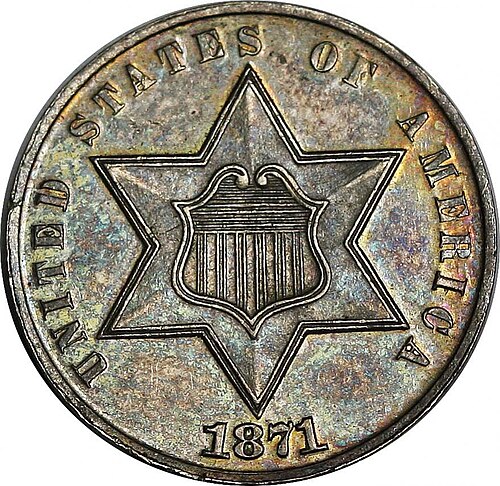
It is a very small, thin silver coin, only about 14 mm across, with a plain edge. All were designed by James B. Longacre. The front shows a six-pointed star with a shield in the middle, and the back shows the Roman numeral III for three cents. In 1854 lines were added around the star, so 1854 and later coins look different from the earliest ones. Coins from New Orleans (1851 only) have an O mint mark; all others were struck in Philadelphia and have none. They were made for circulation from 1851 to 1872; 1873 coins were made only as proofs for collectors. Don't confuse it with the larger three-cent nickel, which is copper-nickel and has no silver.
Why does a dealer pay less than melt value?
Dealers need room to cover refining, shipping and resale costs, so most pay a percentage of melt value for common-date coins.
What is "junk silver"?
Common-date 90% silver coins that are bought and sold for their silver content rather than their collector value.
Is it legal to melt coins?
US rules (31 CFR part 82) prohibit melting one-cent and five-cent US coins. That rule does not cover dimes, quarters, half dollars, dollars or bullion coins. Most people sell coins whole to a dealer rather than melting them.